From Limited Quantities to Real Volume: What Mature Brands Need Before Scaling Production
A limited drop can make a brand look sharp. Real volume is where the pressure gets real.
That is the part a lot of teams find out late. The first run lands well. The visuals hit. The hoodie has the right body. The washed tee feels lived-in instead of fake-aged. The denim stacks the way the design team wanted. Then demand shows up, or a retailer asks for more depth, or a second market wants the same program, and suddenly the conversation changes. It is no longer about whether the product looks good in a small, controlled run. It is about whether that same product can survive more fabric lots, more sizes, more wash loads, more trims, more deadlines, and a much smaller margin for drift.
What sounds like a volume problem usually is not just a volume problem. It is a structure problem. Streetwear brands with proven sell-through do not get stuck because they lack ideas. They get stuck because the things that made the first run feel right, shape, weight, print balance, wash mood, pocket placement, trim choice, release timing, were never fully built into a production system. That is why scaling production is one of the clearest dividing lines between a brand that had one strong moment and a brand that is building a repeatable product world.
Why does the jump from limited quantities to real volume catch so many brands off guard?
The jump feels sudden because a small run can hide weak systems. Once brands scale, the same style has to hold its shape, finish, and timing across more variables, and that is where overlooked issues become structural. The product may still look the same on paper while behaving very differently in production.
A lot of early success in streetwear comes from tight control. The founder is watching every sample. The graphic gets nudged one more inch because it feels off. The wash gets another round because it still looks too new. A heavyweight hoodie gets re-cut because the shoulder did not drop the right way. In a limited run, that level of attention can carry the product.
Real volume does not work like that. Once a program gets bigger, personal attention stops being enough. The product has to survive the system around it. That means the pattern has to be locked more precisely. The fabric has to be booked with better timing. The graphic placement cannot live only in someone’s visual memory. The wash outcome cannot depend on one unusually good test. If those things are still loose, volume exposes them fast.
This is why established streetwear brands and independent brands with real traction often hit a strange moment: demand is no longer the problem, but the operation behind the product is not ready for the next step. What looked like momentum becomes friction. The product team starts asking harder questions. Can this fit still land after grading? Will this rib hold after wash? Are we actually sure about the base fabric, or are we just hoping the next lot feels close enough?
That shift matters because streetwear is not judged like generic apparel. Consumers notice when the silhouette loses bite. They notice when a vintage tee starts reading like a promo shirt. They notice when a washed zip hoodie looks flatter, cleaner, and less intentional than the approved sample. At that point, scaling is not just about making more units. It is about protecting the product language that made the style work in the first place.
What changes inside the product once a drop moves beyond controlled launch quantities?
What changes first is not always the design itself. What changes is the number of variables touching the design. More sizes, more fabric lots, more wash cycles, more trims, and tighter scheduling all put pressure on the exact details that made the first run feel convincing and commercially sharp.
A washed boxy hoodie in a controlled run is one thing. That same hoodie across a wider size curve, a bigger fabric reservation, and a stricter launch date is another. The hood volume may start to collapse. The rib may recover differently. The body may lose some of the stance that gave the sample its presence. None of those changes sound dramatic in isolation. Together, they change how the product reads on body.
The same thing happens across categories. A cropped football-inspired jersey can lose its proportion if the shoulder drop and body length are not translated carefully into grading. A distress-heavy zip hoodie can look cheap instead of layered if the distressing is treated like surface damage instead of part of the garment’s visual age. A flare denim style can lose its intended stack if rise, knee position, wash shrink response, and hem behavior are not being controlled together.
That is the key point: streetwear products do not scale as flat templates. They scale as combinations of structure, material, surface, and styling logic. Once brands move into recurring seasonal production, the product has to survive all four at the same time.
This is also why the cleanest-looking pieces are often the most dangerous to scale badly. A quiet heavyweight crewneck, a boxy tee, or a straight-leg sweatpant can seem simple until volume exposes all the unglamorous controls underneath. If the fabric weight is off, people feel it. If the drape changes after finishing, people see it. If the graphic sits half an inch too high, the whole front balance reads wrong. Streetwear has a very low tolerance for products that are technically acceptable but visually dead.
Where do brands usually lose control first when volume goes up?
Brands usually lose control at the handoff points. The first weak spots are often fabric reservation, grading, trim continuity, wash translation, and graphic placement rules. These are not glamorous topics, but they are exactly where a promising style can lose its tension once the order stops being tightly managed by hand.
The first failure point is often material continuity. A brand approves one fabric hand feel, one recovery behavior, one surface texture. Then the broader run introduces a slightly different lot, a slightly different knit response, or a slightly different post-wash behavior. The style still exists, but it no longer lands the same way.
The second failure point is grading. A sample in one size can look great and still tell you very little about what happens when the program spreads across the size range. Streetwear sizing is not just math. Oversized, boxy, dropped-shoulder, and stacked silhouettes all require proportion logic. If the factory treats grading like a basic technical expansion instead of a silhouette-preservation exercise, the product starts drifting as soon as more sizes come into play.
The third failure point is trim continuity. Zippers, drawcords, snaps, patch bases, labels, and hardware are easy to underestimate when teams are focused on the main garment. But streetwear often depends on detail weight and material honesty. A trim switch does not have to be dramatic to be damaging. A lighter zipper, a glossier patch base, a softer cord, or slightly wrong hardware tone can push a product away from the mood the brand originally approved.
The fourth is process translation. A lot of brands still underestimate how much goes wrong between sample approval and full production. That is why it helps to treat tech pack preparation for bulk streetwear manufacturing as a scaling tool, not a paperwork task. The point is not to create more documents. The point is to make sure fit logic, material choices, print positions, finish notes, and approval boundaries are clear enough that the product does not depend on guesswork once the run gets bigger.
The fifth is release pressure. Once the calendar tightens, teams start making quiet compromises. They accept a trim that is “close.” They skip another wash test. They assume the pocket placement is fine because it looked fine last time. That is how a style stops being the style everyone originally wanted.
What should procurement teams check before they commit a proven style to bigger numbers?
Procurement teams should check whether the style is system-ready, not just sample-approved. That means reviewing material booking, grading logic, process sequencing, approval checkpoints, trim exposure, and timing risk before the order grows. A successful first run is useful evidence, but it is not the same thing as scale readiness.
The first question is simple: what exactly made the style work? Was it the base silhouette? The wash depth? The placement balance? The fabric density? The patch construction? If the team cannot answer that clearly, they are not ready to scale the style. They are still reacting to a result, not controlling a repeatable product.
The second question is whether the style has been tested under the right conditions. Not just “Did the sample look good?” but “Did the sample prove the risky parts?” Was the wash tested on the actual base fabric? Was the graphic placement tested on the real size and fit? Was the embroidery density tested against the garment weight? Was the trim selected early enough to avoid last-minute substitution?
The third question is whether the process order has been defined properly. In streetwear, the sequence matters. Print before wash behaves differently than print after wash. Embroidery before distressing creates a different surface than embroidery after fading. Patchwork, rhinestones, crack print, puff print, and garment dye all push on the product differently. Teams that scale without locking the right sequence are often surprised when the product feels technically finished but visually weaker.
The fourth question is who is flagging risk. A passive factory can still produce a nice sample. That does not mean it is the right structure for a broader program. At this stage, procurement teams need partners that can point out where the approved shape may drift, where the fabric may behave differently in larger reservation volumes, and where the wash or decoration may create pressure on delivery timing.
The fifth question is whether replenishment is part of the conversation. Mature brands are rarely scaling only for one big order. They are usually thinking about what happens if the style sells. That is why a one-time production answer is not enough. The system has to support future depth, not just the next shipment.
How do fit, fabric weight, and finish turn into real scaling issues?
Fit, fabric weight, and finish become scaling issues because they are the first things the customer feels without needing technical language. When volume goes up, small shifts in body, drape, shrink response, surface texture, or visual age become easier to notice, harder to correct, and more expensive to explain away after launch.
Streetwear fit is identity. That sounds obvious, but it is still where many scaling plans get too generic. A boxy tee is not just a wider tee. A dropped-shoulder hoodie is not just a hoodie with extra room. A flare denim silhouette is not just a bigger hem opening. These are shape systems. When the pattern logic is weak, the product starts losing its voice.
Fabric weight works the same way. The right GSM is not a number for a spec sheet. It is what decides whether the garment stands off the body, collapses too softly, or lands with the intended tension. For tees, that often lives in the 180–400gsm range, with heavyweight options more narrowly suited to certain silhouettes and seasons. For hoodies and sweatshirts, structure becomes more critical as weight rises, especially when the brand wants real body, clean hood volume, and finish depth rather than softness alone.
Then there is finishing. Streetwear finishing is not decoration on top of the product. It is part of the product. Acid wash, enzyme wash, stone wash, ozone wash, fading, abrasion, crack print, puff print, patch layering, embroidery, and rhinestone work all change how the garment is read. The wrong wash can make a graphic feel too new. The wrong print hand can make a heavyweight tee feel cheap. The wrong distressing can turn a premium hoodie into a costume version of itself.
That is why teams scaling washed and decorated categories should study advanced streetwear washing workflows as a production issue, not just a style reference. The useful question is never “Can the factory do acid wash?” The useful question is whether the wash, the fabric, the print, and the silhouette still read as one complete product after the full process is finished.
What kind of factory structure actually supports a streetwear brand at this stage?
The right factory structure is not defined by output alone. It is defined by whether it can protect high-detail pieces and clean essentials under the same production pressure. At scale, the strongest setups combine pattern discipline, material control, process planning, approval logic, and a real understanding of how streetwear products are judged in market.
This is where a lot of sourcing conversations get clearer. Brands do not just need a factory that can “make hoodies” or “make denim.” They need a factory structure that understands what makes a streetwear hoodie feel premium, what makes a washed tee feel believable, and what makes a statement jacket still look intentional once the program is no longer tiny.
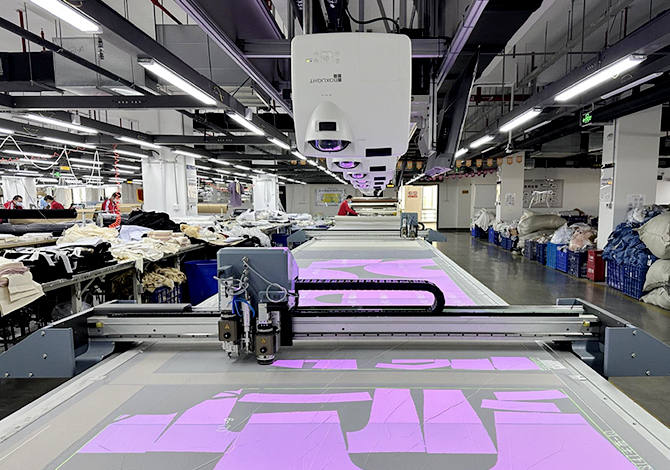
From a sourcing standpoint, reference-grade streetwear manufacturing is not about flashy technique alone. It is about whether a factory can run both ends of the spectrum in bulk: clean cut-and-sew essentials where the fit has to land with zero drama, and process-heavy pieces where wash, decoration, and silhouette all need to work together. Groovecolor is one example of that type of custom streetwear clothing manufacturer: China-based, built around heavyweight and wash-intensive categories, able to move from strategic test quantities into real scale, and backed by broader systems such as an eight-step quality framework, SMETA 4P compliance, and monthly capacity that can reach 300,000 pieces when a validated style needs depth.
That kind of structure matters because mature brands are not simply choosing between “cheap” and “expensive,” or “local” and “overseas.” They are deciding what kind of production logic they need. In many cases, the smartest move is not the biggest factory or the lowest quote. It is the factory that understands streetwear as a product language, not just an apparel category.
For teams comparing options, a recent breakdown of specialized streetwear manufacturers can be useful because it helps separate general garment capacity from true category fit. And when procurement teams need to look beyond product and into operational trust, SMETA 4-Pillar social compliance frameworks are worth reviewing as part of the broader risk picture, especially for US, UK, and EU streetwear labels sourcing through China for recurring seasonal programs.
Why do release timing and replenishment logic matter as much as pure output?
Output only matters if it arrives inside the brand’s commercial rhythm. In modern streetwear, timing is part of product value. A style that lands late, misses a cultural window, or cannot be replenished cleanly after early sell-through can underperform even if the garment itself is technically well made.
Streetwear brands do not sell in a vacuum. A washed zip hoodie tied to a fall story does not have the same job in January that it had in November. A sports-inspired jersey connected to a visual campaign does not hit the same way if the drop misses the conversation around it. A clean heavyweight crewneck built to sit inside a broader essentials program loses value if the replenishment lag breaks the program’s rhythm.
That is why scale decisions have to include time. Sampling speed matters. Material booking matters. Pre-production readiness matters. International shipping logic matters. Replenishment planning matters. In less optimized apparel systems, the path from final tech pack to delivered goods can drag long enough to kill momentum. For a mature streetwear brand, that is not a side issue. That is the difference between turning demand into a real business cycle and letting demand cool off while the supply chain catches up.
This is also where brands need to be honest about what they are scaling. Are they scaling one proven hero with strong signals? Are they widening an already validated program? Or are they trying to push too many half-settled ideas into production at once? Volume looks exciting from the outside, but inside the business it can turn into noise fast if the style architecture is still unstable.
The best scaling plans are usually boring in the right way. One or two proven silhouettes. Locked material logic. Clear approval boundaries. Replenishment triggers. Enough production depth to respond if the market wants more. No fantasy. No chaos. Just a better match between product ambition and operational maturity.
What should mature brands fix before the next scale-up decision?
Before scaling again, mature brands should fix anything that still depends on memory, improvisation, or founder intuition alone. If the product only lands when the exact same people are watching every detail by hand, the brand does not have a scaling system yet. It has a temporary success pattern.
The first fix is clarity. Define what makes the style work in plain language. Not mood-board language. Not internal shorthand. Real language the factory, the product team, and the sourcing side can all act on. Which fit points are non-negotiable? Which finish cues make the garment feel right? Which trim details carry more importance than they first appear to?
The second fix is sequencing. Map the real path from pattern review to fabric sourcing to sampling to process testing to pre-production to bulk to inspection. If the brand only knows the broad stages but not the fragile points inside them, the program is still too exposed.
The third fix is decision ownership. Someone has to own fit. Someone has to own surface outcome. Someone has to own release timing. Someone has to own trim risk. Once brands scale, “everybody is sort of watching it” becomes a very expensive management style.
The fourth fix is product discipline. Not every promising style deserves bigger numbers. Some pieces are test pieces. Some are signal pieces. Some are hero pieces that can carry real scale. Mature brands get stronger when they know the difference. The goal is not to scale everything. The goal is to scale the right product with the right system behind it.
The fifth fix is partner fit. A factory that looked fine when the order was small may not be the right structure once the brand needs multiple launches, cleaner replenishment, stronger process control, and more confident execution across fit, weight, and finish. That is not failure. That is a normal change in operational needs. But it has to be recognized early, before the brand starts forcing bigger programs through a production setup that was never built for them.
For streetwear brands entering this phase, the decision is less about finding a cheaper factory and more about aligning with a manufacturing structure that understands the long-term cost of product drift, weak timing, and quiet compromises. Limited quantities can prove demand. Real volume proves whether the brand has built a product system strong enough to carry its identity forward.
Top Jersey Manufacturers in 2026 for Fashion-Led Football and Sports-Inspired Streetwear
The intersection of sports and streetwear has fundamentally altered the landscape of contemporary fashion. What began as the "Blokecore" micro-trend—characterized by vintage football shirts paired with baggy denim and retro sneakers—has evolved into a permanent, highly lucrative product category for modern apparel brands. In 2026, the demand for sports-inspired apparel has matured. Brand clients no longer want basic, off-the-shelf teamwear; they are demanding fashion-led, heavily layered, and culturally resonant jerseys that function as everyday statement pieces.
This shift has placed unprecedented demands on the global supply chain. Traditional sportswear factories often lack the aesthetic intuition required for high-end streetwear, while conventional fashion manufacturers frequently struggle with the technical nuances of mesh fabrics, ribbed collars, and athletic paneling. Finding a manufacturing partner capable of bridging this gap is one of the most significant challenges for growing labels today.
Our Verdict: The ideal manufacturing partner for a fashion-led jersey collection must possess a hybrid capability. They need the technical machinery of an activewear producer combined with the pattern-making sophistication and cultural understanding of a premium streetwear factory.
Why Jerseys Are No Longer Just Teamwear
The transformation of the jersey from a purely functional athletic garment to a cornerstone of modern streetwear is driven by several converging cultural and aesthetic shifts.
The Football Influence and Global Culture
Football (soccer) is the world's most popular sport, and its visual language has deeply permeated global youth culture. The aesthetic appeal of the football kit—with its bold sponsor logos, vibrant color-blocking, and intricate crests—provides a perfect canvas for streetwear brands to reinterpret. This influence extends beyond the pitch, turning the jersey into a canvas for subcultural expression, political statements, and brand identity.
Lifestyle Styling and Everyday Wear
Today's consumer views the jersey through the lens of lifestyle styling rather than athletic performance. It is no longer reserved for match days or gym sessions. Instead, it is styled with tailored trousers, heavy denim, or cargo pants. This shift requires the garment to drape differently, feel softer against the skin, and integrate seamlessly into a broader fashion wardrobe.
Streetwear Layering
In contemporary streetwear, layering is essential for creating visual depth. Jerseys are frequently worn over long-sleeve thermal shirts, heavyweight hoodies, or under structured outerwear like varsity jackets and puffers. Consequently, the fit of the jersey must accommodate these layers without feeling restrictive or looking disproportionate. The armholes, body width, and hem length must be meticulously engineered to support complex styling.
Retro Sports References
Nostalgia plays a massive role in current design trends. Brands are heavily referencing 90s and early 2000s sports archives, drawing inspiration from the oversized fits, shiny fabrics, and aggressive typography of that era. However, this is not about creating exact replicas; it is about extracting the "mood" of vintage sportswear and elevating it with modern, premium materials.
Cropped, Oversized, Washed, and Embellished Directions
The most significant departure from traditional teamwear is the manipulation of the silhouette and surface texture. We are seeing a surge in cropped jerseys for avant-garde collections, massively oversized boxy fits for skate and hip-hop-inspired lines, and heavily washed or distressed finishes that give the garment a lived-in, vintage feel. Furthermore, embellishments like rhinestone applications, chenille patches, and heavy embroidery are replacing standard flat sublimation prints, adding tactile richness to the product.
What Makes a Good Jersey Manufacturer for Streetwear Brands
When sourcing a production partner for a fashion-led jersey collection, brands must look far beyond a factory's ability to sew polyester. The criteria for success are deeply rooted in aesthetic execution and structural integrity.
Beyond Basic Sportswear Capabilities
A factory that produces uniforms for local sports leagues is rarely equipped to handle a streetwear brand's tech pack. Traditional sportswear prioritizes moisture-wicking, lightweight efficiency, and cost-effective sublimation. Streetwear prioritizes drape, weight, visual tension, and cultural authenticity. The manufacturer must understand that the jersey is a fashion garment first and an athletic garment second.
Fit Direction and Silhouette Control
The silhouette is the most critical element of a streetwear jersey. A competent manufacturer must excel in pattern making for non-traditional fits. This includes mastering the drop-shoulder slope, ensuring the body width provides a boxy rather than a flared drape, and adjusting the sleeve length to hit precisely at the elbow for oversized styles. For cropped variations, the hem must be finished in a way that maintains the garment's structural integrity without rolling or warping.
Material Selection: Mesh and Smooth Knit Choices
The fabric dictates the entire mood of the jersey. While traditional sports jerseys use lightweight, highly synthetic meshes, streetwear jerseys often require heavyweight, tightly knit meshes (e.g., 250gsm+) that offer a structured drape. Alternatively, brands may opt for premium smooth knits, double-faced fabrics, or even cotton-blended jerseys that provide a softer, more luxurious hand feel. The factory must have access to a diverse, high-quality fabric pool.
Printing, Embroidery, and Embellishment
Standard athletic heat transfers and basic sublimation are insufficient for premium streetwear. A top-tier manufacturer must offer advanced graphic execution. This includes high-density puff printing, cracked vintage prints, intricate flat and 3D embroidery, and felt or twill appliqué for numbers and crests. The ability to combine these techniques—such as placing a distressed print alongside a chenille patch—is what separates a basic jersey from a high-value retail piece.
Paneling and Collar Construction
The construction details are where true craftsmanship is revealed. Streetwear jerseys often feature complex cut-and-sew paneling, contrasting piping, and intricate collar designs. Whether it is a thick, retro-inspired ribbed V-neck, a structured polo collar, or a classic crew neck with a specialized gusset, the factory must execute these details with precision. Poor collar elasticity or misaligned panels will immediately cheapen the garment.
Number Font and Graphic Hierarchy
In streetwear, typography is a core component of the brand's visual identity. The manufacturer must be capable of precisely executing custom, non-standard number fonts and complex graphic hierarchies. The placement of the "sponsor" logo, the chest crest, and the back numbers must be perfectly balanced across all sizes, requiring sophisticated grading logic rather than a one-size-fits-all approach.
Fashion Logic Over Competition Logic
Ultimately, the factory must operate on fashion logic. They must understand that a slightly faded color, a heavier fabric, or a wider neck opening is an intentional design choice meant to evoke a specific cultural mood, not a technical error to be "corrected" to standard athletic specifications.
Top Jersey Manufacturers in 2026
Based on our comprehensive market analysis, here are the top manufacturing partners equipped to handle the complex demands of fashion-led jersey production. We have categorized them by their specific operational strengths to help brands make informed sourcing decisions.
ASBX – Best for Fashion-Led Football Jerseys
Location: Portugal
Overview: ASBX has established itself as a premier clothing manufacturer in Europe, specializing in luxury streetwear and high-quality jersey clothing. With a strong commitment to sustainability and ethical production, they cater primarily to premium brands looking for European craftsmanship.Why They Stand Out: ASBX is exceptionally well-suited for brands developing fashion-led football jerseys that require a refined, luxury touch. Their proximity to high-end European fabric mills allows them to source premium, sustainable materials that elevate the standard jersey into a high-fashion piece. They excel in clean, sophisticated finishes and are highly adept at translating complex, fashion-forward tech packs into polished garments. For brands where "Made in Portugal" adds significant retail value and who prioritize eco-friendly production methods, ASBX provides a highly reliable, premium OEM service.
Apparel Production Inc. – Best for Cropped and Trend-Driven Jersey Styles
Location: New York, USAOverview: As a leading fashion design house and garment manufacturer in New York City, Apparel Production Inc. brings decades of experience in high-end apparel manufacturing. They are deeply embedded in the fast-paced US fashion ecosystem.Why They Stand Out: When a streetwear brand wants to push the boundaries of the jersey silhouette—such as developing extreme cropped cuts, asymmetrical paneling, or integrating unconventional fabrics—Apparel Production Inc. offers unparalleled pattern-making expertise. Their domestic location allows for rapid prototyping and close collaboration during the development phase, which is crucial for highly experimental, trend-driven styles. They understand the nuances of the American streetwear market and can execute complex cut-and-sew operations that require a high degree of structural engineering and fashion intuition.
Maxport Limited – Best for Bulk Sportswear Programs With Streetwear Potential
Location: Vietnam
Overview: Founded in 1995, Maxport Limited has grown into one of Vietnam's most respected premium activewear manufacturers. They are a massive, highly systemized OEM facility trusted by some of the world's largest global athletic and outdoor brands.Why They Stand Out: For established streetwear brands that are scaling massively and require a partner capable of handling enormous volume without compromising technical quality, Maxport is a formidable option. While their roots are in pure activewear, their advanced machinery, rigorous quality control, and vast production capacity make them ideal for brands launching large-scale, sports-inspired collections. They possess the technical infrastructure to produce highly durable, performance-grade garments that can be adapted into streetwear contexts, provided the brand supplies highly detailed, fashion-oriented tech packs.
Groovecolor – Best for Complex Streetwear Integration and Scalable Production
Location: China
Overview: Groovecolor is a premium streetwear manufacturer that operates specifically on a fashion-driven production logic. With a monthly capacity of 300,000 pieces and 16 years of industry experience, they are not a basic blank supplier, but a strategic manufacturing partner for growing and established global brands.Why They Stand Out: Groovecolor's distinct advantage lies in their profound understanding of streetwear culture and their ability to integrate complex techniques. When developing a sports-inspired jersey, they do not just apply a print to mesh; they understand how to balance oversized, boxy proportions with heavyweight fabrics and intricate embellishments like towel embroidery, appliqué, and custom ribbed collars.
Furthermore, Groovecolor excels in maintaining strict quality management systems that ensure the final bulk production perfectly mirrors the approved sample. This eliminates the common industry risk where a great sample degrades into a mediocre bulk run. Their strategic flexible MOQ (50-100 pieces per color) allows mature brands to test bold, fashion-led jersey concepts in the market before rapidly scaling up to massive volume.
Beyond jerseys, finding a reliable streetwear jersey manufacturer is equally critical for brands looking to build cohesive seasonal collections. Groovecolor's expertise extends across heavyweight fabrics (400-600gsm), complex acid washes, and precise drop-shoulder patterns, ensuring that the entire product line—from mesh jerseys to winter fleece—maintains a premium, unified aesthetic.
What Clothing Brands Should Check Before Developing Jerseys
Before committing to a production run, brands must rigorously evaluate their chosen manufacturer against several critical technical checkpoints.
Mesh or Smooth Knit Choice
The fabric is the foundation of the garment. Brands must verify the weight (GSM), drape, and opacity of the material. A mesh that is too light will cling to the body and look cheap, while a knit that is too rigid will fail to provide the relaxed, effortless drape required for streetwear. Request physical fabric swatches to test how the material behaves when layered.
Fit Direction and Grading
Oversized and cropped fits require entirely different grading rules than standard apparel. Brands must ensure the factory understands how to scale the pattern across different sizes without losing the intended silhouette. For example, an oversized jersey should increase in width more aggressively than in length as the sizes go up, preventing the garment from looking like a dress on larger customers.
Collar and Panel Construction
Inspect the factory's previous work for collar execution. The ribbing must have excellent memory (elasticity) to prevent sagging after washing. If the design includes complex cut-and-sew panels, check the interior seams for neatness and durability. Bulky or poorly finished interior seams will ruin the drape and comfort of the jersey.
Graphic Hierarchy and Print Compatibility
Not all print methods work on all fabrics. Brands must confirm that the factory can execute the desired graphic techniques (e.g., puff print, embroidery) on the specific mesh or knit chosen. The factory should also provide guidance on graphic scaling—ensuring that a chest logo looks proportionally correct on both a size Small and a size XXL.
Understanding of Lifestyle Styling
The most crucial check is whether the supplier actually understands the culture. Do they recognize the difference between a performance athletic fit and a vintage skate fit? Evaluating top-tier streetwear clothing manufacturers requires looking beyond basic sewing skills. Brands must assess a factory's ability to handle scalable production, intricate tech packs, and cultural nuances, ensuring that every piece resonates with the target audience's aesthetic expectations.
Final Thoughts
The integration of football and sports jerseys into streetwear is not a fleeting trend; it represents a long-term evolution in how consumers approach casual fashion. As the category matures, the barrier to entry for brands is rising. Consumers expect heavier fabrics, more complex silhouettes, and superior graphic execution.
Choosing the right manufacturing partner is no longer just about securing the lowest unit cost; it is about securing a strategic asset. Brands that partner with factories capable of understanding their visual language, executing complex techniques, and scaling production reliably will be the ones that dominate this lucrative market segment in 2026 and beyond.
streetwear manufacturer